
CSPS AGIDO Online Lecture: Dr Konstantinos Paschalidis (Hellenic National Archaeological Museum), Ties of Affection. Procreation & family patterns in the Mycenaean societies of Achaia Clauss and Mygdalia, near Patras
The event is organised and hosted by our AGIDO / ΑΓΗΔΩ PG and ECR team, under the auspices of the Centre for Spartan and Peloponnesian Studies (CSPS) at the University of Nottingham. It will take place on Monday 9 November, 17:00 GMT (19:00 Athens time) on MS Teams.
The event is free to attend but you must register in advance via this link: https://events.teams.microsoft.com/event/934884a1-e9aa-44e7-962c-91ecb9c3fd59@67bda7ee-fd80-41ef-ac91-358418290a1e
The talk will also be livestreamed via https://vachosradio.gr/
Summary:
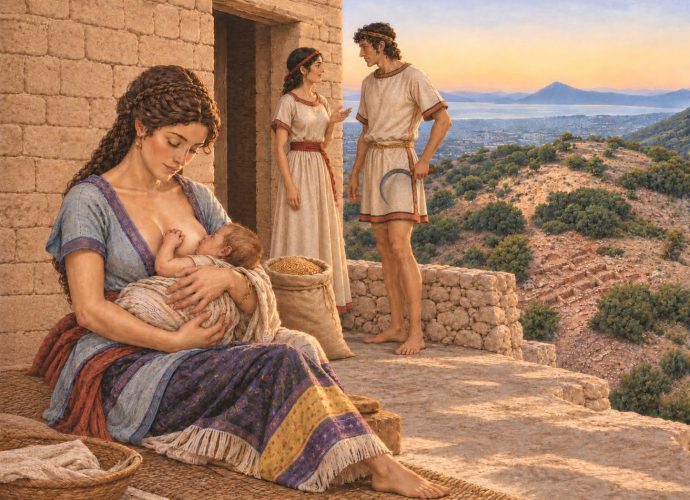
The Mycenaean cemetery at Achaea Clauss, near Patras revealed an enigmatically small number of children burials compared to those of adults, suggesting that they were buried elsewhere and not in the adults’ cemetery. Nevertheless, this presentation sheds light on those specific children, who were chosen to be interred with certain adults -mostly women- once they were dead, in other words with the phenomenon of simultaneous burials of parents and children at Clauss. Summing up the multiple evidence from Clauss it can be argued that women had already started childbearing in their late teens and possibly at a rate of one child per year, suggesting that families were large. It seems that mothers at Clauss continued to have children for quite a few years. Men would also become fathers at an equally young age, a tendency implying that marriages -if the institution of marriage existed at all- were performed before reaching adulthood, in adolescence and, indeed, between people of almost the same age.
Right above the cemetery of Clauss, at the top of the neighbouring hill, lies the Mycenaean settlement of Mygdalia. Of great interest are the intra muros burials of children. Cut beneath the floors of houses and semi-open-air spaces, the ten child graves of Mygdalia date to the 16th and the first half of the 15th century BC—namely the LH I and LH IIA periods —and correspond to the first generations of the settlement’s inhabitants. They contained the remains of almost 30 foetuses, infants, and young children. The recently published DNA and bone collagen analysis of seven infants from Grave 3 —conducted in 2021 at the Curt Engelhorn Center for Archaeometry in Mannheim, Germany (available at: https://www.nature.com/articles/s41559-022-01952-3 )— delineated the pedigree of a family spanning two generations of deceased infants whose parents were first cousins.
The infants were related via the paternal line, as their fathers were brothers, and they apparently shared the same residence. The reconstruction of this family tree provided evidence for the patrilocal transmission of property from parents to male offspring, virilocal postmarital residence patterns (the relocation of female spouses to the male household), and the cohabitation of multiple large nuclear families under a single roof. Furthermore, it highlighted instances of offspring from different maternal lines —whether due to serial monogamy following widowhood or polygamy remains unclear— alongside the fostering or adoption of orphaned infants related in the second degree, among other compelling socio-biological insights.
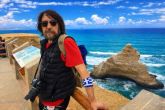
Our speaker: Dr Kostantinos Paschalidis studied History at the Ionian University and Archaeology at the University of Ioannina, where he received a PhD. Since 1992, he has participated in dozens of archaeological excavations in Greece and Jordan. He co-directs the excavation of the Mycenaean settlement in Mygdalia, near Patras. He is a Curator in the Department of Prehistoric, Egyptian, Cypriot and Near Eastern Collections of the Hellenic National Archaeological Museum since 2002. He was a Secretary at the Central Archaeological Council from 2012 to 2025. He has published two archaeological monographs in English and about forty academic papers, concerning various topics of the Creto-Mycenaean world and of archival research related to the history of the Archaeological Service and the HNAM. He received an IKY scholarship (1998-2000). He has been a Peter Warren Visiting Professor at the University of Bristol (2018). He was a Fellow at the Center for Hellenic Studies at Harvard University in Washington DC (2019) and a Margo Tytus Fellow at the University of Cincinnati (2026). For a list of publications, please follow the link: https://namuseum.academia.edu/KostasPaschalidis
The AGIDO webinar series is organised and hosted by Abigail (Abbie) Costello (PhD researcher, CSPS), assisted by Thea Wolff (PhD researcher, CSPS), Dr Abigail (Abi) Spanner (Classics & Archaeology Honorary Research Fellow), Catherine Viola (PhD researcher, CSPS) and Malvina Alexopoulou (MA; field archaeologist, Hellenic Ministry of Culture) on behalf of the CSPS. The webinar series’ mentors are Professor Ellen Millender (Reed College), Professor Emeritus William Cavanagh (CSPS), Professor Emeritus Stephen Hodkinson (CSPS), Professor Georgios Spyropoulos (CSPS; Hellenic Ministry of Culture), Dr Sophia Germanidou (Hellenic Ministry of Culture), and Dr Chrysanthi Gallou (CSPS Director). The series runs with the kind support of the “Daughters of Penelope – Sparta” association.
Comments are closed, but trackbacks and pingbacks are open.