




Dr Mait Kõiv (University of Tartu, Estonia)
on
Tyrants and their supporters in the formative poleis of Archaic Greece
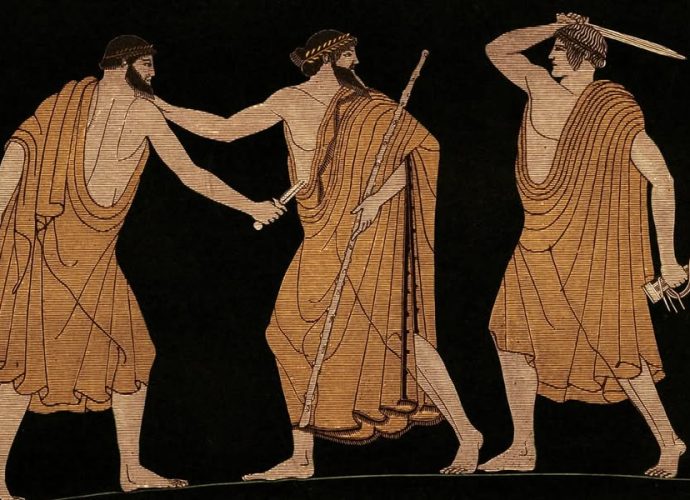
The lecture will examine the contrasting interpretations of Archaic Greek tyranny. On the one hand, tyranny has been understood as a form of elite leadership that relied primarily on the rulers’ personal retinues; on the other, it has been characterised as a form of popular rule that sought and secured the support of common people. Dr Kõiv will draw on both Archaic poetry and the narrative patterns of traditional accounts, which show the tyrants (tyrannoi) as monarchs (monarchoi) whose attempts to consolidate their power and establish durable dynastic rule ultimately failed, despite the temporary success of ruling families in a number of poleis.
He will argue that this failure to establish a secure and sustainable power base stemmed from the relatively limited scope of social hierarchies within Greek communities. These conditions made it difficult for rulers to secure firm control over the resources they needed and compelled them to negotiate the support of different social groups. Such support, however, remained conditional and precarious.
Dr Mait Kõiv is Associate Professor of Ancient History at the University of Tartu, Estonia.
He received his PhD in 2003 from the University of Tartu, with a dissertation on the traditions reflecting state formation in the Archaic Peloponnese (PhD thesis title: “Ancient tradition and early Greek history. The origins of states in early-archaic Sparta, Argos and Corinth”, published as a monograph in the same year). His research interests include the development of historical accounts based on oral traditions, including the retrospective construction of early chronologies by classical authors, and the comparative approach to socio-political development and state formation in the Early Iron Age and Archaic Greece. His current project “The Roots of Ancient Greek Democracy” is focused on the development of social structure, economic conditions, political systems and ideological frameworks developing in Ancient Greece during the early Iron Age and Archaic period (11th–6th centuries BCE), i.e. the processes which produced the following establishment of Classical Greek democracies.
The event is organised and hosted by Tyrannica: The Interdisciplinary Network for the Study of Tyrannies, Personalist Dictatorships and Authoritarian Regimes, in partnership with the Centre for Spartan and Peloponnesian Studies at the University of Nottingham. It will take place on Thursday 29 October, 17:00 UK time (19:00 Athens time) on MS Teams. The event is free to attend but you must register in advance via this link: https://events.teams.microsoft.com/event/4280e591-5981-460d-9f4c-1a31ea92879f@67bda7ee-fd80-41ef-ac91-358418290a1e
The talk will also be livestreamed via https://vachosradio.gr/
Please forward this invitation to anyone you think might be interested in attending. All welcome!
Comments are closed, but trackbacks and pingbacks are open.